


Syllabus: GS1/Culture
Context
- India-origin Buddhist relics will be enshrined in 108 Jangchub Chortens (stupas of enlightenment) that are being constructed under Project 108.
About Zung and Jangchub Chorten
- The relics form part of the ‘zung’, the living embodiment of the Buddha’s enlightened body, speech and mind.
- The sacred components of the zung include thangkhas (traditional Tibetan Buddhist paintings on cotton or silk fabric), statues, precious stones, rolled mantra scrolls, or dharanis, and relics of enlightened beings.
- The Chorten is the Tibetan/Bhutanese term for a ‘stupa’. It is a Buddhist sacred monument that enshrines relics, scriptures or other consecrated objects.
- The jangchub chorten commemorates the Buddha’s attainment of enlightenment and symbolises the triumph of wisdom over ignorance.
- Once consecrated, a chorten is rendered equivalent to the living Buddha.
What is Project 108?
- Location: Along the Mau Chhu River in Gelephu, Bhutan.
- Objective: To establish a spiritual foundation for the proposed Gelephu Mindfulness City (GMC), envisioned as a global economic hub integrating spirituality, sustainability and economic development.
- Design: Each chorten will be approximately 15 metres tall, with 108 metres between successive structures.
- Significance of 108: In some Tibetan Buddhist traditions, the Kangyur (principal collection of sacred Buddhist scriptures) is arranged in 108 volumes.
- In the Vajrayana Buddhist tradition, 108 symbolises spiritual completeness, cosmic balance, and the purification of karma.
About Buddhist Stupas
- A stupa is a Buddhist architectural structure built to preserve the relics of the Buddha or other enlightened beings and commemorate important events in Buddhism.
- Architectural features: A traditional stupa consists of five major elements:
- Anda (Dome): The hemispherical structure representing the cosmic egg and the universe.
- Harmika: A square railing-like structure above the dome, symbolising the abode of the gods.
- Yashti: A central pillar rising above the harmika, representing the cosmic axis.
- Chhatra: Umbrella-like discs placed on the pillar, symbolising spiritual sovereignty and protection.
- Medhi: A raised circular platform or terrace supporting the dome, often used by devotees for circumambulation.
- Religious significance: Stupas symbolise the Buddha’s enlightened mind and teachings. Devotees traditionally perform Pradakshina (clockwise circumambulation) around them as an act of reverence.
- Evolution: Stupa architecture spread across Asia and evolved into different regional forms, including Tibetan Chortens, Sri Lankan Dagobas and East Asian pagodas.
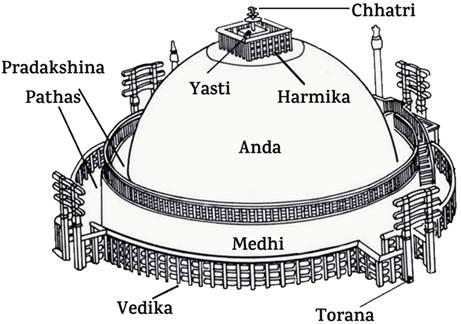
Source: TH
Previous article
News In Brief 02-11-2026
Next article
International Day for Biosphere Reserves
